From the shift in the global order post the election of Donald Trump to the relentless way AI now dominates discussions about tech and so much else, it’s hard not to feel like 2025 was the year in which, after a long time of nothing changing, suddenly it felt like everything was shifting. And fast.
Over the last 12 months, it has become clear to Link Digital that open data still has a vital role to play in everything from creating a more equitable and ethical AI to driving economic growth and greater trust in government. And, just as we have since Link Digital came into being in 2002, we remain laser focused on continuing to provide quality services using open source software such as CKAN – the Comprehensive Knowledge Archive Network. But we can also see that the open data ecosystem is rapidly evolving, and Link Digital is excited to change with it.

Here are four milestones that made 2025 a rewarding year but which also presented us with exciting new challenges.
Global collaborations
Providing our clients with high quality tailored solutions to their digital and data needs remains absolutely core to what we do. In 2025, we worked with a wide range of clients, including governments, not for profits, and academic institutions.
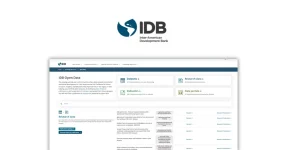
One of the most significant international projects we completed in 2025 was modernising the Inter-American Development Bank’s (IDB) existing open data catalogue, including transitioning it from proprietary software provider to open source CKAN. It was a complex job, requiring considerable out of the box thinking on our part, primarily related to how to deal with the size of some of the IDB’s datasets, far larger than those typically hosted on CKAN catalogues and open data portals.
We helped another multilateral organisation modernise and future proof its enterprise level public data catalogue, to make it more secure and efficient. We delivered a tailored CKAN data and statistics platform to improve the internal data organisation and search capacities of the design department of a major university in northwestern Europe. And we assisted a longstanding client – the Pacific Data Hub, run by the principal scientific and technical organisation supporting development in the Pacific region – to successfully migrate their site to the latest version CKAN, enabling it to take advantage of the latest file extension capabilities and performance improvements.
Illustrating the trusted reputation and steady growth of our Canadian subsidiary we continued to work with the University of Manitoba’s Centre for Earth Observation Science, on the increasingly complex requirements of its Canadian Watershed Information Network site. We were first engaged to overhaul the site in 2020, and this year we implemented a distributed ecosystem with CKAN as the central hub and adding a sophisticated Drupal component. And we also worked on the Quebec Regional Transport Authority Data Platform, the government transportation authority that plans, finances, and integrates public transport in Greater Montreal in Quebec, Canada. The project involved the establishment of a public data hub and an internal data catalogue, enhancing data management and accessibility for public visitors, authenticated data consumers, and Authority staff.
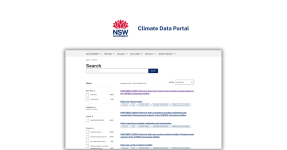
Link Digital also continues to service a range of Australian clients. In 2025 this included working with the NSW Department of Climate Change, Energy, the Environment and Water to implement an innovative and cost effective solution to make their local-scale climate datasets more discoverable and shareable to a broad range of stakeholders and users, in a highly secure environment.
Contributions to CKAN that have global impact
It has been another big year for Link Digital’s role as one of CKAN’s co-stewards. Over 2025 we continued to build our deep knowledge of and involvement in the governance, community engagement and technical development aspects of CKAN. As part of this, our dedicated team of experts contributed numerous extensions or improvements to CKAN’s core software, which will benefit all the software’s users. These include:
- Improved viewing of GeoPackages – a file format that enables the design and viewing of maps with layers – in CKAN through the development of a new extension, ckanext-gpkg-view. You can read about it in more detail here.
- A major change to CKAN’s core that will make large data downloads on CKAN up to fifteen times faster. This change, which you can get more detail here, will be available in the next version of CKAN – 2.12.
- An update to ckanext-selfinfo, an extension developed by one of our team members, which gives administrators a crucial, real-time overview of system, usage, and error telemetry directly in the CKAN interface.
- A major update for the ckanext-syndicate extension, which enables a user to easily copy – or syndicate – datasets from one instance of CKAN to another.
- CKAN Sync for Drupal, an innovative module that allows developers to seamlessly connect their Drupal site menu structure with any CKAN-enabled open data management system via RESTful API.
- Improvements to CKAN’s file management capabilities, enabling better tracking, audit trails, and sharing flexibility.

Thought leadership
Link Digital’s commitment to the open data ecosystem not only concerns data as a driver of economic value. This was apparent from the range of international forums we were involved in in 2025. A key theme in nearly all these events is that while the open data movement has reached a significant level of maturity and continues to be seen as vital, the concept of openness – economic, political, technological, dated related – is under growing pressure, including from unethical AI, authoritarian political currents and disinformation spread by malicious actors.
Link Digital staff attended Berlin’s Creative Bureaucracy Festival in May. A forum for public administrators to discuss how to work smarter and, particularly, to ramp up their use of data and digital to provide more innovative, efficient, and better services, it showcased the massive pressures facing European governments to improve data and digital driven services.
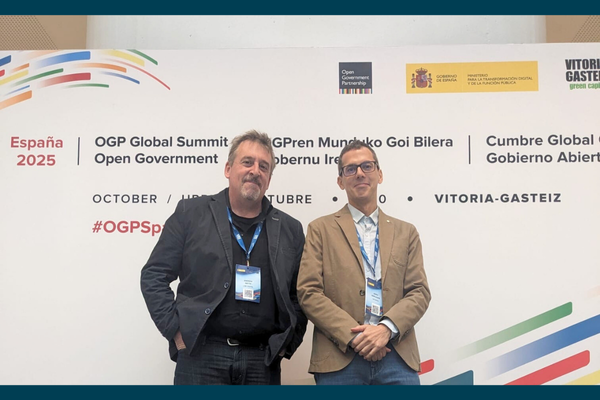
The challenges facing open government and the public sector from the polycrisis – an increasingly popular shorthand to describe not just the existence of multiple major, mutually reinforcing global crises – were also on display during the Open Government Partnership Summit 2025 (OGP). Link Digital staff were among the more than 2000 participants who came together in Vitoria-Gasteiz, Spain, in early October, to discuss including the algorithmic transparency of AI and trends in civic tech and digital public infrastructure for open government.
The CKAN experts of Link Digital led a special in-person workshop as part of the csv,conf,v9 conference, in mid-September, in Bologna, Italy. The theme of this year’s conference, ‘Data for Communities’, resonated deeply with Link Digital’s mission of building digital infrastructure that empowers governments, researchers, and communities to make data useful and usable. The workshop provided a general overview of CKAN and a roadmap and vision for CKAN’s future evolution, leading to the software’s next major release, CKAN 3.0.
Link Digital’s Executive Director Steven De Costa attended the International Data Week (IWD) 2025 in Brisbane, Australia in mid-October. Hosted by the Committee on Data, the World Data System of the International Science Council, and the Research Data Alliance, IDW brings together data scientists, researchers, industry leaders, entrepreneurs, policymakers and data stewards from across the globe to explore how to leverage the data revolution to improve science and society through data-driven discovery and innovation.
De Costa was also among the Link Digital staff that took part in the Canadian Open Data Summit. Organised by the Canadian Open Data Society, this year’s CODS was combined with GovMaker Canada, an initiative led by the Pond-Deshpande Centre at the University of New Brunswick, focused on advancing public sector innovation and open government. As was the case in the other events, a key focus of the conference was AI, its problems but also how to use it to help with data discovery.
New challenges and new service offerings
Link Digital’s core offering remains ‘creating meaningful change’ by helping our clients to make the most of data and digital opportunities through open source technologies like CKAN. But given some of the changes discussed above, the last 12 months have also seen us start the process of developing new service offerings that tackle how the open data and digital ecosystem are evolving.
It is no longer enough just to make data more open and shareable. AI is changing traditional digital service interfaces, potentially enabling greater public access to the data that is stored on platforms such as open data portals, but also making interactions with them more complex and multifaceted. And, in turn, this is raising other questions that open source civic tech providers such as Link Digital must engage with, including how AI can be used to create higher quality open data and better open data infrastructure.
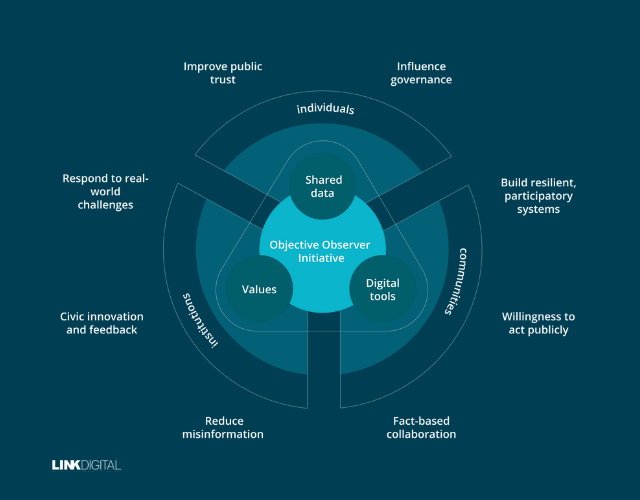
On a deeper level, Link Digital is also excited to explore how we might move away from traditional models in which citizens are asked to place their trust platforms and institutions, the basis of a lot of civic technology, to a new approach in which digital accountability is not only legal or contractual, but it’s observable, communicable, and subject to the verifiability of its own claims. And we are also keen to discover how we might use such a system to generate high quality open data sets that can better inform policy making and digital service provision, as well as strengthen government, create a more ethical AI, and deal with issues such as the deliberate spread of disinformation.
Early 2026 will see us start to roll out new service offerings in this area. These will be focused on collaboration with various educational, research, and non-profit institutions interested in civic tech, civic engagement, and ethical AI, as well as practitioners interested in participating in civic tech activities. If you’re interested, stay tuned for more details.
For now, here’s to a successful 2025 and an even better 2026. Thank you for being part of our journey.