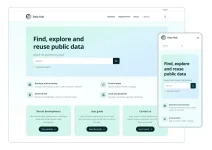
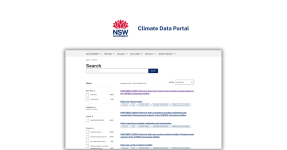
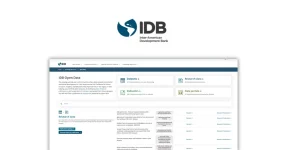
While the Comprehensive Knowledge Archive Network or CKAN is vital to Link Digital’s work on data catalogues and open data platforms, we often use it with another piece of open source technology – Drupal. CKAN can be configured and set up to function as a data catalogue or open data platform, while Drupal is deployed to help manage and present large data repositories in an attractive, interactive and user-friendly way.
But while it is stable and secure, like any digital platform, Drupal has a release cycle, and 2026 is a pivotal year for anyone still running older versions. These need to be updated by the end of this year to ensure that they continue to function smoothly and securely.
Yan Rudenko is Link Digital’s CKAN Lead Developer. In addition, he also has a decade of Drupal experience, starting from version 7 of the software. I talked to him about Drupal’s capabilities and why the remaining months until December 2026 are an important time for those who use the software.
The benefits of Drupal
“Drupal is a powerful and flexible content management system that allows for easy creation and management of content,” says Yan. “It is also a secure and scalable platform that can be used to build a variety of websites and applications.”
“Many organisations now build websites with AI tools, using popular prompts and technologies based on Javascript frameworks. But they don’t consider a lot of aspects that Drupal can deliver out of the box, especially when it comes to long-term maintenance and scalability.”
While Drupal and CKAN can be used separately in applications that manage and publish data, Link Digital often uses them together, as they reinforce each other’s strengths. CKAN performs the backend functions of storing and cataloguing data, as well as developing detailed metadata, while Drupal serves as the front-facing user management system. Organisations can utilise Drupal’s flexible theming and content management structure to create visually engaging web applications, enhancing the presentation of the data and creating a far more interactive, content-rich and attractive web user experience.
While Drupal can be used on its own to store, edit and display datasets as content, Yan maintains this only works for small, curated lists or marketing “featured datasets”. Drupal is weak for full catalogue scale data portals that require harvesting capabilities, resource formats, datastore, and API consumption, etc.
“When switching to Drupal and CKAN, users should expect a platform that is powerful, flexible, and easy to use. Especially when there is a split of responsibilities between those responsible for different aspects of the website. It is important to have a platform that is easy to use and understand.”
Also to read on our site: Why organisations should use it as part of their data management
Why Drupal users need to upgrade
The next five months are vital for anyone running older versions of Drupal.
After 14 years of service, Drupal 7 reached its official end of life on 5 January 2025, and the Drupal Security Team is no longer releasing security advisories, patches, or compatibility updates for it. This means that if you are still running Drupal 7, your site will be subject to serious issues. And for organisations subject to legal compliance frameworks, running unsupported software can create not only security problems, but compliance liabilities.
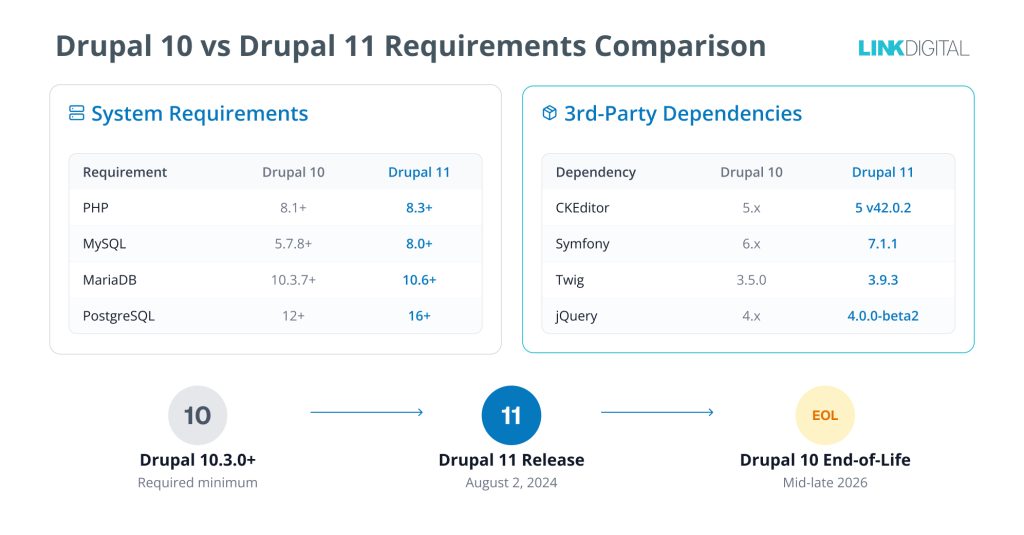
Drupal 10 will reach end of life on 9 December 2026, with Drupal currently targeting the release of Drupal 12 for the same time. There is no direct upgrade path from Drupal 7 to the most up to date version of Drupal. Moving forward means rebuilding the site on the latest Drupal codebase, migrating your content, and reimplementing custom functionality.
“Each major release version of Drupal reworks or improves existing code, which leads to big changes that cannot be just added to Drupal 10, this involves new features and better security due to reworks. This is why it is important to upgrade to the latest version of Drupal as soon as possible.”
This means the jump from 10 to 11 is far more manageable than a Drupal 7 migration. Drupal 10 and 11 share a continuous upgrade path, provided your site is on Drupal 10.3.0 or later release, and provided your contributed modules and themes already have Drupal 11 compatible releases in place. Even for those existing sites that are up to date, a Drupal 12 upgrade is probably not feasible until at least early 2027.
Yan stresses that the stakes of being caught on the wrong side of an end-of-life deadline for your version of Drupal are high.
“Each version of Drupal is not only about adding new features and improvements. It also adds security improvements for the end users, which are crucial for the long term maintenance and scalability of the website.”
“If organisations do not upgrade to Drupal 11 before December 9, they will face a number of challenges. They will not be able to use the latest features and improvements of Drupal 11, including not being able to use the latest security patches and updates. They will also be unable to use the latest documentation and support resources or the latest community and ecosystem resources. This is important because it will be difficult to find help and support if they need it.”
Getting ahead of the deadline to upgrade your Drupal capability
Link Digital has been delivering Drupal development for government agencies, universities, and international organisations for more than two decades, and can help your organisation get ahead of the deadline to upgrade your Drupal capability.
If you’re weighing up a Drupal 7 rebuild or a Drupal 10 to 11 upgrade, message Link Digital today to talk through your options and to deliver a migration plan that can get you ahead of capability deadlines.